sexta-feira, maio 13


Housework and Frequency adverbs


Housework and Adverbs of frequency!

- Clica no livro e bom trabalho!!!

Housework+Frequency Adverbs
Here's a great place to practice housework and frequency adverbs. Click on the picture to learn and play. Enjoy!

Present Simple or Present Continuous?! exercises.
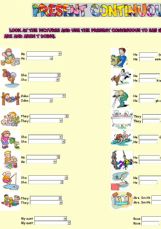
There are two types of exercises: multiple choice and gap-filling.
1- In the first one, students choose the right option to build affirmative and negative sentences in the present continuous/ look at the pictures and fill in the gaps with the present continuous.
2-In the second exercise, there are 24 sentences students have to complete with the present continuous or the present simple.
1- In the first one, students choose the right option to build affirmative and negative sentences in the present continuous/ look at the pictures and fill in the gaps with the present continuous.
2-In the second exercise, there are 24 sentences students have to complete with the present continuous or the present simple.
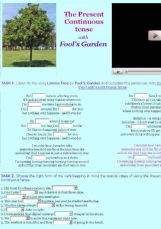
3- Students listen to the song Lemon Tree by Fool´s Garden and fill the gaps with the present participle they hear. There are 2 more tasks on Present Continuous tense (including special cases).
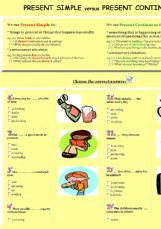
4- This Online Exercise is for practising the two present tenses - simple & continuous. Lots of multiple choice practice suitable for elementary/low-intermediate students (based on my Ws I downloaded some time ago). Hope you like and find it useful!
quinta-feira, maio 12
vocabulário -food (5th year)
Portuguese Vocabulary - Food
|
| © Copyright Andrew Quilley Last Updated: 13 December, 2007 |   |
Espreita também AQUI... vocabulário, pronúncia e tradução --> Muito completo e útil!!!!
terça-feira, maio 10
Interactive vocabulary exercises - Junk Food
Learn/ Revise the vocabulary related to junk food with the following activities :
1) Learn the vocabulary,
2) Match the words with the pictures,
3) Match the pictures with the sounds,
4) Do a crossword !

Food - vocábulario e jogos
Learn / Revise the vocabulary related to food with the following activities :
1) Learn the vocabulary,
2) Match the words with the pictures,
3) Match the pictures with the sounds,
4) Do a crossword !

segunda-feira, maio 9
LIveWorksheet - Likes and deslikes -food - listening
Likes and dislikes (listening), an interactive worksheet by victor
liveworksheets.com
liveworksheets.com
sábado, maio 7
sexta-feira, maio 6
Junk food - vocabulário e jogos
Learn / Revise the vocabulary related to junk food with the following activities :
1) Learn the vocabulary,
2) Match the words with the pictures,
3) Match the pictures with the sounds,
4) Do a crossword !
quinta-feira, maio 5
Interactive vocabulary exercises - Food
Revise the vocabulary related to food with the following activities :
1) Learn the vocabulary,
2) Match the words with the pictures,
3) Match the pictures with the sounds,
4) Do a crossword !

terça-feira, maio 3

domingo, maio 1
Interactive vocabulary exercises - > Daily routine
Learn / Revise the vocabulary related to daily routine with the following activities :
1) Learn the vocabulary,
2) Match the words with the pictures,
3) Match the pictures with the sounds,
4) Do a crossword !

Par : Mlle Haquet
Publié : 19 octobre 2010
Present Simple - Frequency Adverbs - 5th year - revisão
Present Simple
1. Usa-se normalmente para descrever
hábitos ou rotinas diárias e está normalmente associado a certos advérbios ou
expressões de tempo.
Ex. I always play tennis (Eu jogo sempre …)
2. Usa-se para exprimir factos ou
verdades aceites como tal:
ex. Our children work hard at school (As nossas
crianças trabalham muito na escola)
3. Usa-se para exprimir leis naturais ou
factos cientificamente comprovados:
Ex. The moon moves around the earth. (A lua gira à volta da Terra)
4.
Usa-se
para exprimir factos ou situações que persistem ao longo do tempo:
Ex. Martha lives in Spain. (A Marta vive em Espanha)
Regras:
1. Regra geral acrescenta-se –s ao verbo para he/she/it . (ex. He lives…)
2. Quando o verbo termina em –y precedido
de uma vogal só acrescentamos –s
(ex. he plays computer.)
3.
Quando
o verbo termina em –y, precedido
de consoante, tiramos o –y e acrescentamos –ies.
(ex. he studies English.)
4.
Quando o verbo termina
em:
o, ss, x, ch, sh
acrescentamos –es.
(ex: 1-she brushes her teeth;
2-She watches the film;
3-She crosses the street / he misses
the train
4- He Boxes the toys up
5- He does
the homework;
Adverbs of frequency:
+
|
always
|
usually
|
often
|
sometimes
|
rarely
|
never
|
-
|
sempre
|
normalmente
|
Muitas vezes
|
Às vezes
|
raramente
|
nunca
|
1.Os advérbios colocam-se antes do verbo principal e depois do verbo To Be
Ex: I usually get up very
early.
I am usually on
time.
2.Sometimes pode
colocar-se também no início da frase.
Ex:
Sometimes I get up early.
I sometimes get
up early
Subscrever:
Mensagens (Atom)