segunda-feira, fevereiro 19


domingo, fevereiro 18
Present Continuous - regras
Regras:
1.No geral
acrescenta-se –ing. ex: read -> reading
2. No caso
de verbos terminados em –e
retiramos o –e
e acrescentamos –ing.
Ex: dance -> dancing
3.No caso de verbos que terminam em t, p, m ou n precedidos de uma só vogal,
dobramos a consoante
e acrescentamos –ing.
Ex: stop ->
stopping // Swim -> swimming // run -> running
// admit -> admitting
Nota: No
caso de verbos terminados em –el, dobramos a consoante e acrescentamos –ing.
Ex: travel -> travelling
4. No caso
de verbos que terminam em –ie,
estes mudam para –y,
antes de acrescentarmos –ing.
Ex: die –
dying // lie
– lying // tie – tying
NOW – AT THE MOMENT -> P. Continuous
sábado, fevereiro 17
Present Continuous - review - interactive exercises
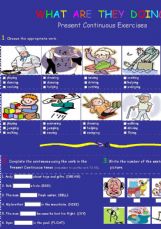
Simple exercises to review the Present Continuous tense.
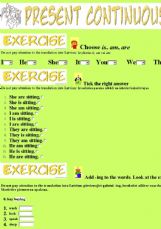
(easy)
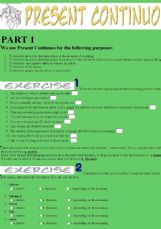
(advanced)
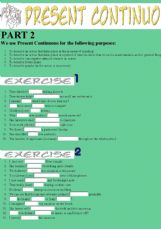
(advanced 2)
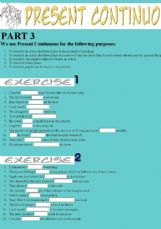
(advanced 3)
quinta-feira, fevereiro 15
Jobs (Present Simple + Present Continuous) interative book

Learn / revise the vocabulary related to jobs (and the difference between the present simple and the present continuous (BE + V-ing)) with this interactive book !
quarta-feira, fevereiro 14

Saint Valentine's Day

Um livro para se familiarizarem com a festa de São Valentim: vocabulário; actividades de compreensão oral; vídeos, músicas... e actividades de escrita!  Mrs Haquet in Collège Marc Chagall
Mrs Haquet in Collège Marc Chagallterça-feira, fevereiro 13
Powerpoint
This PowerPoint-Presentation is aimed to teach some vocabulary on Saint Valentine's Day.

Vocabulary included: cupid, arrow, heart, love (I'm in love), date, girlfriend, boyfriend, valentine, present, flowers, rose, chocolates, kiss.
segunda-feira, fevereiro 12
what is "Pancake day"?
"In the UK, we have a tradition of making and eating pancakes on Shrove Tuesday, which falls between 2 February and 9 March, depending on the date for Easter. Pancake Day, or Shrove Tuesday to use its correct title, is the traditional feast day before the start of Lent on Ash Wednesday. Lent - the 40 days leading up to Easter - was traditionally a time of fasting and on Shrove Tuesday Christians went to confession and were 'shriven' (absolved from their sins). Pancake Day became a great way to use the foods that were given up for Lent – milk, butter, and eggs. The humble pancake has featured in recipe books as far back as 1439."
The popular name for Shrove Tuesday, Pancake Day marks the start of the build-up to Easter. It is followed by Ash Wednesday, the start of Lent - a Christian fast - so a custom has arisen of making pancakes to use up foods traditionally given up for Lent.
Pancake Day 2018 falls on Tuesday 13 February in 2018.
in:
https://www.mirror.co.uk/all-about/pancake-dayquinta-feira, janeiro 18
Infinitive / Gerund (explicação + avançada)
O infinitivo é a forma original do verbo tal qual se encontra num dicionário.
Pode aparecer na frase com ou sem o “to”.
O gerúndio é o verbo com a terminação –ing.
O infinitivo com “to” é de uso mais amplo aparecendo após a grande maioria dos verbos, adjetivos, advérbios, nomes, pronomes, etc:
Exemplos:
I expect to be there.
This car is hard to park.
She knows where to find the keys.
Também pode indicar propósito, finalidade:
They went there to buy something = They went there in order to buy something.
Usa-se o infinitivo sem o “to”:
1. após: modal verbs (can, could, must, etc.)
2. após: os auxiliares do-does-did-will-would
3. após: had better, would rather, rather than
4. após: as preposições but e except: exemplo: She did nothing but complain.
5. após: os verbos make e let: exemplo: You make me feel brand new.
O gerúndio é usado como substantivo nas funções de sujeito, objeto indireto ou objeto indireto (após preposição use sempre o gerúndio):
Exemplos:
1. Swimming is his favourite sport.
2. He likes swimming.
É usado também após os verbos go e come indicando atividade física, e na expressão go shopping:
We’re going riding this afternoon.
When are you going shopping? As soon as we get our salary.
Usa-se SEMPRE o gerúndio após os verbos abaixo:
Admit - Understand
Avoid - Excuse
Appreciate - Finish
Consider - Keep
Delay - Mention
Fancy - Mind
Deny - Miss
Detest - Practice
Dislike - Resist
Enjoy - Risk
Escape - Quit
Da mesma forma com os verbos de percepção:
Feel - See
Observe - Notice
Hear - Watch
Atente para o uso das seguintes expressões abaixo.
Algumas vêm acompanhadas de infinitivo (com ou sem o “to”), outras de gerúndio:
1. Had better (’d better): é melhor, seria melhor - sem o “to” (expressa conselho)
You’d better tell me the truth.
Had she better try again?
You’d better not leave late.
2. Would rather (’d rather): preferir
We’d rather stay home.
Would you rather watch tv?
I’d rather not see her now.
3. Used to: costumava; indica ação habitual no passado:
I used to love you.
Did he use to play tennis as a child?
They didn’t use to go to the movies.
4. Be used to/Be accustomed to/ get used to: estar acostumado a – são sempre seguidas de gerúndio porque o “to”, no caso, é preposição:
We’re used to getting up late.
5. Can’t help: não poder deixar de – sempre seguida de gerúndio:
I can’t help falling in love.
6. To be worth/worthwhile: valer a pena
It was worth listening to him.
Pode aparecer na frase com ou sem o “to”.
O gerúndio é o verbo com a terminação –ing.
O infinitivo com “to” é de uso mais amplo aparecendo após a grande maioria dos verbos, adjetivos, advérbios, nomes, pronomes, etc:
Exemplos:
I expect to be there.
This car is hard to park.
She knows where to find the keys.
Também pode indicar propósito, finalidade:
They went there to buy something = They went there in order to buy something.
Usa-se o infinitivo sem o “to”:
1. após: modal verbs (can, could, must, etc.)
2. após: os auxiliares do-does-did-will-would
3. após: had better, would rather, rather than
4. após: as preposições but e except: exemplo: She did nothing but complain.
5. após: os verbos make e let: exemplo: You make me feel brand new.
O gerúndio é usado como substantivo nas funções de sujeito, objeto indireto ou objeto indireto (após preposição use sempre o gerúndio):
Exemplos:
1. Swimming is his favourite sport.
2. He likes swimming.
É usado também após os verbos go e come indicando atividade física, e na expressão go shopping:
We’re going riding this afternoon.
When are you going shopping? As soon as we get our salary.
Usa-se SEMPRE o gerúndio após os verbos abaixo:
Admit - Understand
Avoid - Excuse
Appreciate - Finish
Consider - Keep
Delay - Mention
Fancy - Mind
Deny - Miss
Detest - Practice
Dislike - Resist
Enjoy - Risk
Escape - Quit
Da mesma forma com os verbos de percepção:
Feel - See
Observe - Notice
Hear - Watch
Atente para o uso das seguintes expressões abaixo.
Algumas vêm acompanhadas de infinitivo (com ou sem o “to”), outras de gerúndio:
1. Had better (’d better): é melhor, seria melhor - sem o “to” (expressa conselho)
You’d better tell me the truth.
Had she better try again?
You’d better not leave late.
2. Would rather (’d rather): preferir
We’d rather stay home.
Would you rather watch tv?
I’d rather not see her now.
3. Used to: costumava; indica ação habitual no passado:
I used to love you.
Did he use to play tennis as a child?
They didn’t use to go to the movies.
4. Be used to/Be accustomed to/ get used to: estar acostumado a – são sempre seguidas de gerúndio porque o “to”, no caso, é preposição:
We’re used to getting up late.
5. Can’t help: não poder deixar de – sempre seguida de gerúndio:
I can’t help falling in love.
6. To be worth/worthwhile: valer a pena
It was worth listening to him.
quarta-feira, janeiro 17
Forming Gerund - breve explicação em INGLÊS + exercícios
Forming Gerunds
Here is a brief review of gerunds and how to form them.
ex: walking, talking, thinking, listening
ex: think + ing = thinking
Spelling Rules
There are a few spelling rules that you need to know in order to form gerunds correctly. The spelling of a gerund depends on the vowels (a, e, i, o, u) and consonants (b, c, d, f, etc.) at the end of the verb.
Rule | Example |
|---|---|
| If there is more than one consonant, just add ING | think + ing = thinking |
| If there is more than one vowel, just add ING | beat + ing = beating |
| If there is one vowel and one consonant, and the syllable is stressed, double the consonant and add ING | hit + t + ing = hitting |
| If there are one or more consonants and E, remove the E and add ING | take + ing = taking |
| In most other cases, just add ING | study + ing = studying see + ing = seeing |
terça-feira, janeiro 16
Likes and Dislikes (GERUND)
Likes and
Dislikes
Verb "to
like"

Pay attention!
1. We add -s or -es in the 3rd person singular.
E.g. He likes / He doesn't like.
2. In the interrogative form we use the auxilary verb "to be" E.g. Do you like oranges? / Does he like cakes?
 3. In the negative form we use the
auxilary verb "to do" and the negative
"not".
3. In the negative form we use the
auxilary verb "to do" and the negative
"not".
 The verbs "likes and
dislikes" can by followed by a noun.
The verbs "likes and
dislikes" can by followed by a noun.
E.g. I like
apples.
 They can also be followed by a verb.
For example:


 They can also be followed by a verb.
For example:

When like/dislike are followed by a
verb you need to add the -ing ending to the
verbs.

sábado, janeiro 13
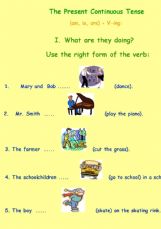
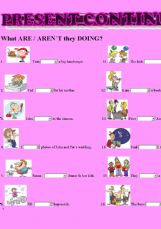
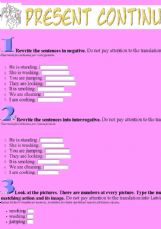
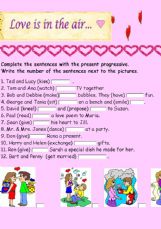
Present Continuous - some online activities
Present Continuous Activities

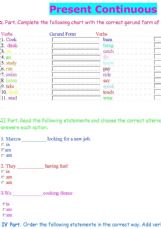
Here are a few activities for you to practice the present continuous. This one here is a fill-in-the-gap exercise. Use the present simple or the present continuous.Click here to begin.
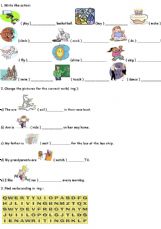
| Review -ing form some exercises to review or check if your pupils have acquire the present continuous and the -ing formation Level: elementary Author:MariaElena |

segunda-feira, janeiro 8

quinta-feira, janeiro 4

Subscrever:
Mensagens (Atom)